
D-Comp Dry
Hit The Accelerator On Your Farm’s Efficiency
D-Comp Dry catalyzes the breakdown of crop residue, converting it into valuable nutrients that promote healthier and higher yielding plants.
Leftover Residue. Missed Potential.
Post-harvest plant matter is full of nutrients, but it doesn’t always return to the soil in a timely manner. Stalks and fiber can block seed-to-soil contact and create a nutrient deficiency by tying up nitrogen, keeping it from your plants. That’s lost fertility and penalized yields.
D-Comp Dry Accelerates Residue Breakdown for Healthier Soil
D-Comp Dry is a blend of fiber decomposing enzymes with multiple strains of bacteria and fungi. In furrow, it deploys mineral solubilizers that transfer nutrients into plants and increase yields. As a broadcast, it is designed to break down remaining plant residue from harvested crops and convert it into food for living plants.
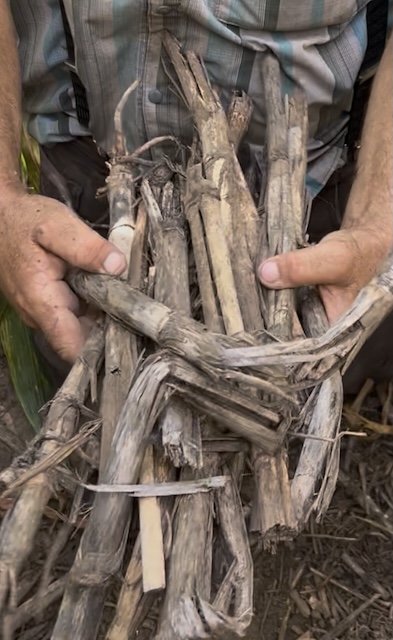

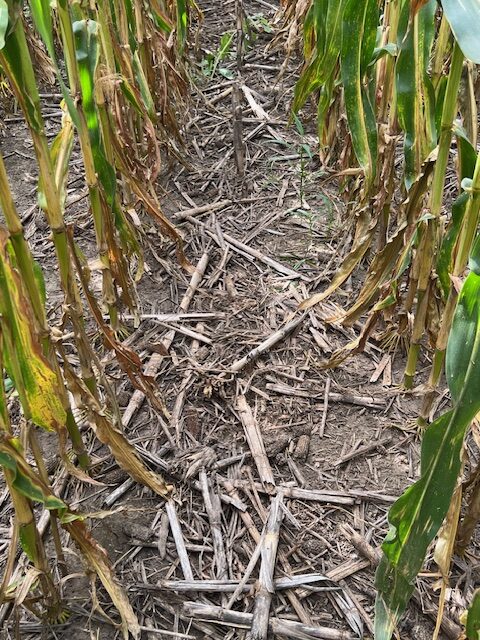
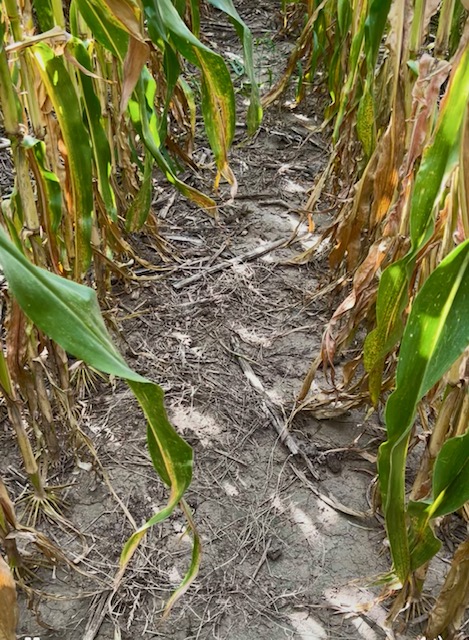
More nutrients stay in the soil as biomes, fewer are lost to the air and your field becomes a more fertile, carbon-rich and active environment.
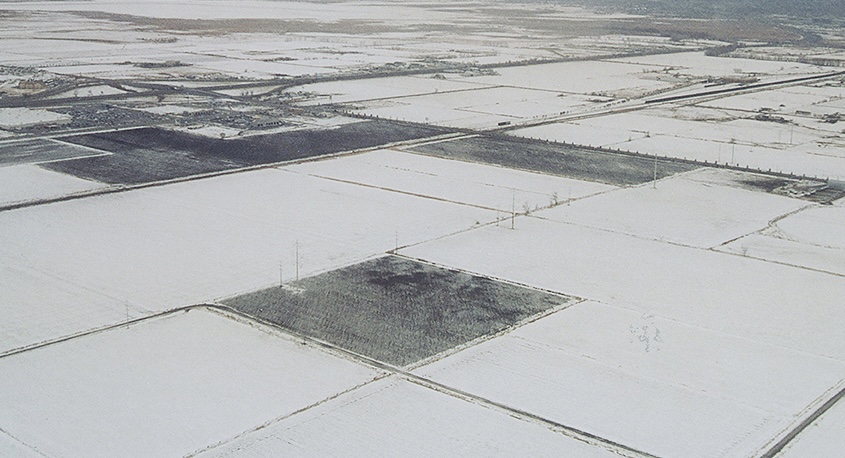
How D-Comp Dry Works
With a jump start from fibrolytic enzymes, bacteria and fungi ferment lignin, cellulose, xylans, and pectin into carbon polymers, phenols and organic acids
D-Comp Dry also uses proprietary organisms, creating energy, to catalyze the process at temperatures as low as 34 degrees F. This unique capability helps with seed emergence early in the season and continued residue decomposition when it gets cold in the fall
Includes biofertilizer strains that also facilitate conversion of mineralized compounds into plant available nutrients that improve yield, as an in-furrow treatment
Reduces jumps in seed placement allowing for more uniform crop emergence, increased germination and more consistent stands
Helps reduce loss by converting decaying plant tissue into microbial food cells that increase soil microbial biomass carbon (SMBC)
Changes soil porosity, water retention properties and promotes soil particle aggregation
Scientifically Proven To Increase Yield
Field trials demonstrate that D-Comp Dry consistently boosts yield performance across corn and soybean applications compared to untreated checks. The following data highlights the measurable yield advantages of incorporating D-Comp Dry.
FAQs
How is D-Comp Dry applied?
D-Comp Dry is a powder formulation that can be applied with standard spray equipment. It can be tank-mixed with water or other biologicals and sprayed directly on crop residue or manure. For best results, apply in the spring directly to residue or in-furrow. D-Comp Dry is also applied in fall – simply surface apply to residue following crop harvest
What’s the advantage over natural decomposition?
D-Comp Dry accelerates the natural breakdown of fibrous residue and manure by using a concentrated blend of microbes and enzymes. It decomposes fiber and lignin before they steal nitrogen away from your crops.
Can I use D-Comp Dry with manure applications?
Yes. D-Comp Dry is highly effective when used with manure. It breaks down undigested proteins, fats, and starches, while reducing nitrogen loss to the air. It also improves the availability of nutrients in manure for plant uptake. The product also dramatically decreases the time it takes to complete the composting process and reduces the amount of manure that needs to be transported to the field.
How quickly will I see results?
Growers notice faster decomposition of residue and improved soil texture as the season progresses. Over time, expect stronger nutrient cycling, better seedbed conditions, and improved soil health.
Is it safe to use D-Comp Dry with chlorinated water?
It is most likely harmful to use rural water sources that have chlorine in them with D-Comp Dry. Well water is the preferred carrier. Rural water can be used with a suitable de-chlorinating agent in accordance with product specifications.
Ready to turn leftover residue and trapped nutrients into next season’s fertility?
D-Comp Dry helps turn yesterday’s work into tomorrow’s growth. Use it in spring, post-harvest, or with manure application—whenever your fields need a boost in nutrient cycling from applied targeted microbiology.